123× EWG Guideline
High risk: Haloacetic acids (HAA5)
cancer
- Detected
- 12.3 ppb
- EWG Guideline
- 0.1 ppb
- EPA Limit
- 60 ppb
123× EWG Guideline
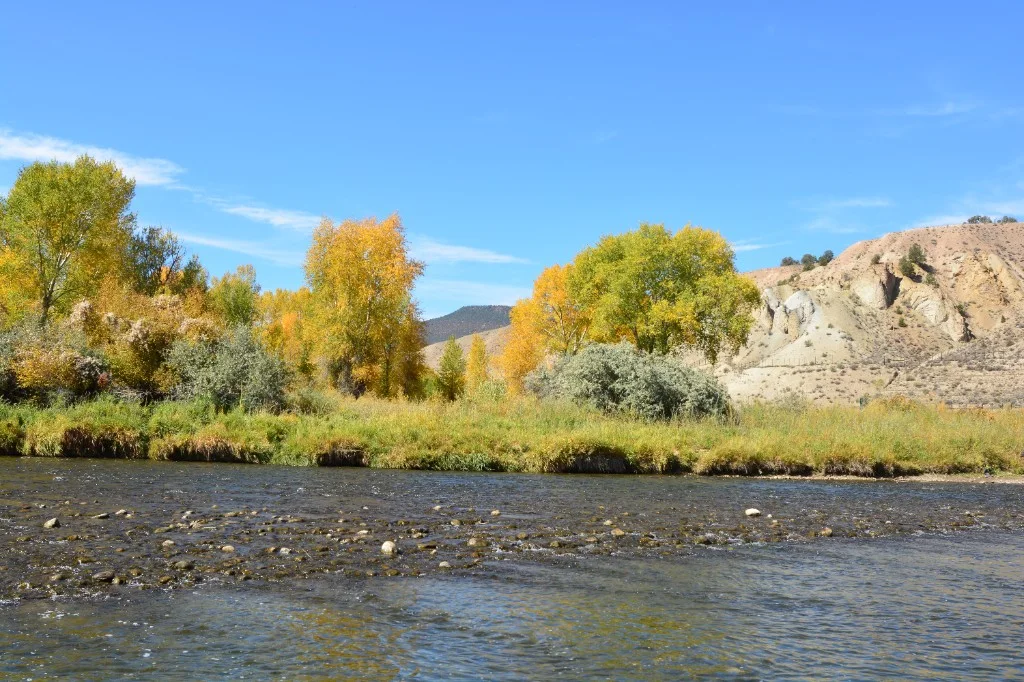
Municipal reports tell part of the story. This page lets you explore Gypsum's water source, hardness, detected contaminants, EWG health guidelines, EPA legal limits — and what those numbers actually mean for a home in the lower Eagle Valley.
Serving Gypsum, Dotsero, and surrounding lower Eagle Valley communities
Gypsum Water at a Glance
A factual snapshot from publicly available utility testing compiled by the Environmental Working Group for Town of Gypsum. Use it as a starting point — the full contaminant explorer below shows detected levels, EWG health guidelines, and EPA legal limits.
Exceeding an EWG health guideline is not the same as violating an EPA legal limit. EWG guidelines are often more conservative research benchmarks; utilities can meet federal standards while still showing results above EWG thresholds.
Local Water Quality
Search and filter individual contaminants for Gypsum. Each card shows the detected level alongside the EWG health guideline and EPA legal limit where available — so you can see the difference between research guidance and federal compliance.
No contaminants match your search or filter. Try adjusting your criteria.
cancer
123× EWG Guideline
cancer
74× EWG Guideline
cancer
68× EWG Guideline
cancer
36× EWG Guideline
cancer
27× EWG Guideline
cancer
21× EWG Guideline
cancer
5.4× EWG Guideline
cancer
5× EWG Guideline
1.8× EWG Guideline
1.4× EWG Guideline
Within EWG Guideline
Within EWG Guideline
Within EWG Guideline
Data source: Environmental Working Group Tap Water Database
Context
EWG health guidelines are often more conservative than EPA legal limits. They reflect levels many scientists and public health agencies consider protective over a lifetime of exposure — not the minimum required for federal compliance.
Municipal water utilities can fully comply with federal regulations while still containing trace levels of contaminants above EWG's recommended thresholds. That does not necessarily mean your tap water is unsafe — it means there are different standards for legal compliance versus long-term health research.
Detected contaminants in a utility report do not automatically mean water is unsafe to drink. Utility testing is a community-level snapshot of treated water leaving the plant, measured against two different kinds of benchmarks.
In-home testing can still be useful because water changes after it leaves the plant. Neighborhood, private wells, plumbing materials, and building age all affect what actually arrives at your tap — something a system-wide report cannot show.
Water quality varies from home to home. Municipal reports reflect utility testing — not what arrives at your kitchen sink after traveling through private plumbing, or whether your home is on a well versus city water. Neighborhood, building age, and pipe materials all matter.
From the Numbers to Daily Life
Utility reports describe water leaving the plant. Hardness and mineral content still show up in showers, fixtures, appliances, and taste once that water reaches a Gypsum kitchen or bathroom — which is why homeowners often notice these patterns first.
Scale on fixtures and glass shower doors that will not scrub away
Dry skin and hair after showering — especially in dry valley winters
Water heaters and appliances working harder than they should
Tap water that affects taste for coffee, cooking, and everyday drinking
Local Context
Gypsum's municipal water often carries minerals that show up as hardness, scale on fixtures, and taste differences — especially in homes with high water use in kitchens and bathrooms.
Town of Gypsum
Municipal & private well
Gypsum is served by the Town of Gypsum municipal water system, which provides treated drinking water to residents from regional surface and groundwater sources.
Moderately hard to hard
Hardness and mineral content in this area often show up as scale, spotting, and extra wear on water-using appliances — measured most accurately at the tap.
Municipal utilities publish annual water quality reports for treated supply leaving the plant. Private wells are not covered by those reports — water chemistry can differ significantly from a neighbor on city water.
Side by Side
The difference shows up in everyday moments around your Gypsum home — not just on a spec sheet.
What many Gypsum homes have now
What homeowners notice after treatment
| Area | Untreated | With Kinetico |
|---|---|---|
| Showers | Dry, tight skin | Softer feel |
| Dishes | Spots & film | Clear & clean |
| Appliances | Scale buildup | Longer life |
| Drinking water | Off taste | Purer taste |
| Laundry | Stiff & faded | Softer fabrics |
What Changes
Softer water on your skin and hair — something you notice the first week.
Dedicated drinking water filtration for coffee, ice, and everyday hydration.
Help extend the life of water heaters, dishwashers, and the fixtures you have already invested in.
From a Gypsum Homeowner
“We absolutely LOVE our Kinetico K5. The water tastes amazing, our coffee and tea are noticeably better and having it connected to our instant hot water dispenser is a game changer. Sundance was fantastic to work with!”
Gypsum Questions
Many Gypsum-area homes have hard water that causes scale, dry skin, and appliance wear. An in-home water analysis shows what is in your water and whether treatment makes sense — before you spend a dollar.
Yes. When drinking-water taste or filtration is the priority, we install Kinetico drinking water systems, including reverse osmosis. Every recommendation starts with your water test — not a catalog page.
Nothing. Our in-home water analysis is complimentary with no obligation. A specialist visits your Gypsum home, tests your water, and explains the results in plain language.
Utility reports are system-wide. An in-home analysis shows what is arriving at your Gypsum kitchen sink — explained clearly, with recommendations only if they make sense.
Schedule an In-Home Water Analysis